English
 Arabic
 French
 Portuguese
 Deutsch
 Turkish
 Dutch
 Italiano
 Russian
 Romaian
 Portuguese (Brazil)
 Greek
 Spanish

Read Last 10 Ayat of Surah Al Imran
Religion |
2026-07-10 07:01:47
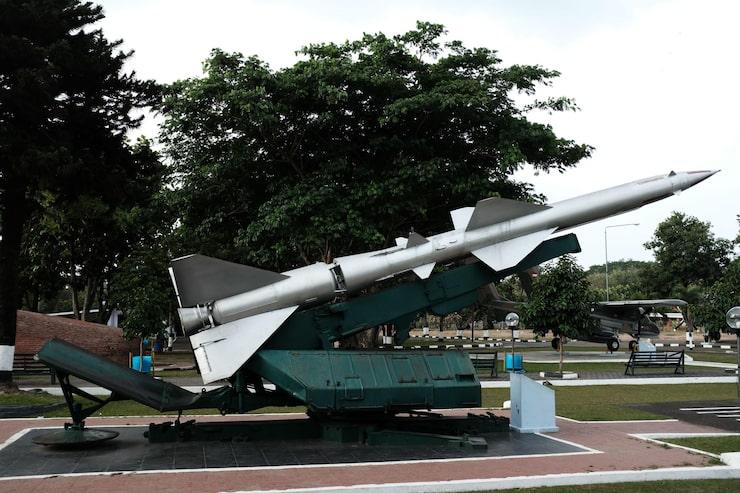
Air defense systems are an important component of the United Kingdom’s national security infrastructure, helping protect military installations, critical infrastructure, deployed forces, and populated areas from aerial threats. These capabilities include missile defense, radar networks, surface-to-air systems, counter-drone technologies, and command-and-control infrastructure. Evolving aerial warfare and the wider use of unmanned systems are encouraging defense organizations to reassess detection, interception, and coordinated response capabilities.
According to the UK Air Defense Systems research report, the market was valued at USD 3.15 billion in 2025 and is projected to reach USD 3.31 billion in 2026 and USD 4.46 billion by 2032, registering a compound annual growth rate CAGR of 5.1% during 2026–2032. Missile defense systems account for approximately 45% of the market in 2026, while land-based platforms represent around 42%, reflecting the importance of ground-based protection capabilities.
The UK is reviewing its defense capabilities in response to changes in the security environment, including the growing complexity of missile and drone threats. Modernization involves more than acquiring new interceptors: it can also require improved surveillance, early-warning systems, communications, command infrastructure, and coordination between military services and allied forces.
The UK government's Strategic Defence Review 2025 highlights the changing demands on air power and the importance of improving readiness and resilience. These priorities place emphasis on the ability to identify aerial threats, share information promptly, and coordinate responses across different defense assets. Procurement decisions must also consider long-term maintenance, personnel training, and the availability of equipment.
Missile defense systems account for approximately 45% of the UK market in 2026, according to the report. These systems contribute to protection against selected aerial threats and form part of the country's wider layered defense architecture. Their effectiveness depends on the coordination of detection equipment, tracking systems, command networks, and suitable intercept capabilities.
The requirements vary according to threat type, range, and operational environment. Short-range systems can address certain localized threats, while medium- and longer-range capabilities serve different defensive roles. Maintaining these systems also requires ongoing testing, equipment servicing, stock management, and upgrades. These lifecycle requirements influence procurement planning alongside the initial acquisition of launchers, sensors, and interceptors.
Land-based platforms represent approximately 42% of the UK air defense systems market in 2026, as stated in the report. Ground-based systems can support the protection of military bases, strategic facilities, and deployed forces. Depending on their configuration, they may combine radar equipment, command units, and launch systems to provide a coordinated defensive capability.
Land-based assets can also complement air and naval capabilities. However, their performance depends on appropriate positioning, sensor coverage, communications, mobility, and integration with wider command networks. Defense planners must assess these requirements against the specific locations and assets requiring protection. Maintenance arrangements and the ability to move or redeploy equipment can also influence operational readiness.
The spread of relatively inexpensive unmanned aerial systems has increased the need for counter-drone capabilities. These systems can use combinations of detection sensors, tracking software, electronic countermeasures, and other response technologies. Their purpose is to identify and manage drone-related threats that may differ substantially from those posed by conventional aircraft or missiles.
Counter-unmanned aerial systems are also changing procurement priorities by creating demand for solutions suited to different threat types and operating environments. Defense organizations must consider detection accuracy, response time, integration with existing infrastructure, and the cost of responding to repeated or multiple threats. Continued technological development is making adaptability and upgradeability important considerations for future systems.
Effective air defense depends on reliable information about aerial activity. Radar and other sensing technologies help detect and track potential threats, while command-and-control systems support information sharing and decision-making. Integration between sensors, communications networks, and defensive assets can help reduce gaps in situational awareness and coordinate responses across different units.
The UK Parliament's briefing on defending UK airspace describes the range of aerial threats facing the country and discusses current capabilities, modernization efforts, and areas where further improvements may be needed. The briefing underscores the importance of early warning, detection, and layered protection. Reliable integration is therefore a significant consideration when introducing new equipment into an established defense network.
The UK defense industry includes companies such as MBDA UK, BAE Systems, Raytheon UK, Lockheed Martin UK, Leonardo, QinetiQ, and other suppliers. Their activities span missile systems, sensors, electronic technologies, software, and associated support services. Competition involves technical performance, system reliability, manufacturing capacity, procurement requirements, and long-term maintenance support.
Developing and deploying advanced air defense systems can involve substantial costs and lengthy testing cycles. Supply-chain constraints, specialist component requirements, and the need to integrate new equipment with existing infrastructure may affect delivery schedules. Procurement authorities must balance operational requirements with affordability, production capacity, and the cost of sustaining equipment over its service life.
The UK air defense systems market is projected to grow through 2032 as defense organizations continue modernizing capabilities and responding to changing aerial threats. Missile defense systems and land-based platforms remain important segments, while counter-drone technology, surveillance, and integrated command systems are relevant areas of ongoing development.
Future progress will depend on procurement priorities, technological advances, industrial capacity, and the ability to maintain effective coordination across defense networks. Suppliers that deliver reliable equipment, compatible systems, and dependable long-term support will remain important to the UK's evolving air defense capabilities.